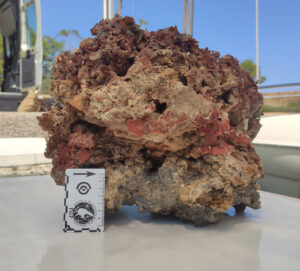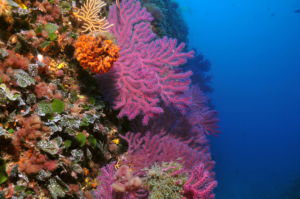
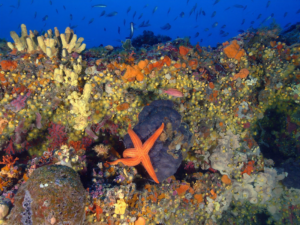
Figs. 1–2: Details of the biodiversity of the coralligenous habitats.
Coralligenous habitat is one of the Mediterranean’s richest and most complex habitats, characteristic of the circalittoral zone, where low light favours shade-loving communities. It is built by encrusting coralline red algae that deposit calcium carbonate, forming biogenic structures colonised by algae and animals.
Characteristic communities include gorgonian forests, formed by colonial cnidarians that give the habitat three-dimensional complexity.
Associated organisms include algae, bryozoans, stony corals, polychaetes, ascidians and sponges, including boring sponges that penetrate the calcareous substrate and contribute to bioerosion.
The complex structure of this habitat shelters numerous invertebrates, including sea urchins and starfish, and supports fish communities that include species such as the swallowtail seaperch and the dusky grouper.
Bioconstruction and bioerosion interact to shape the calcareous structures, creating microhabitats that foster associated biodiversity.
Its slow formation and sensitivity to environmental change make this habitat ecological valuable and important to preserve, and protecting it is essential for marine biodiversity.